- Blog
- Luggage & Security Rules
- What Liquids and How Much Can You Take On a Plane?
What Liquids and How Much Can You Take On a Plane?
Last updated on 5 August 2024

We’ve all been there — standing at airport security, suddenly wondering whether that bottle of shampoo is too big. When it comes to hand luggage liquids, the rules aren’t always as straightforward as they seem. How much liquid can you carry on a plane? Is the 100ml rule still in place? And what actually counts as a liquid?
Understanding the luggage liquid allowance, whether it's checked or carry-on luggage, is essential if you want to avoid delays, extra bag checks, or having items confiscated at the checkpoint. With some UK airports now introducing new scanners and relaxed limits, the answer can even depend on where you’re flying from.
In this guide, we’ll explain exactly what liquids are permitted in hand luggage, what size containers you can take, and how the rules differ between airports — so you can travel confidently and get through security without surprises.
Liquids on a plane at a glance:
At most UK airports, the hand luggage liquid limit is 100ml per container.
Containers must fit in a 1-litre transparent resealable bag (approx. 20cm x 20cm).
Some airports (including Heathrow, Gatwick, Edinburgh and Birmingham) now allow up to 2 litres per container in cabin luggage thanks to new CT scanners.
Rules vary by airport — always check your departure and return airport.
Liquids in hold luggage are not restricted by size, but must be packed securely.
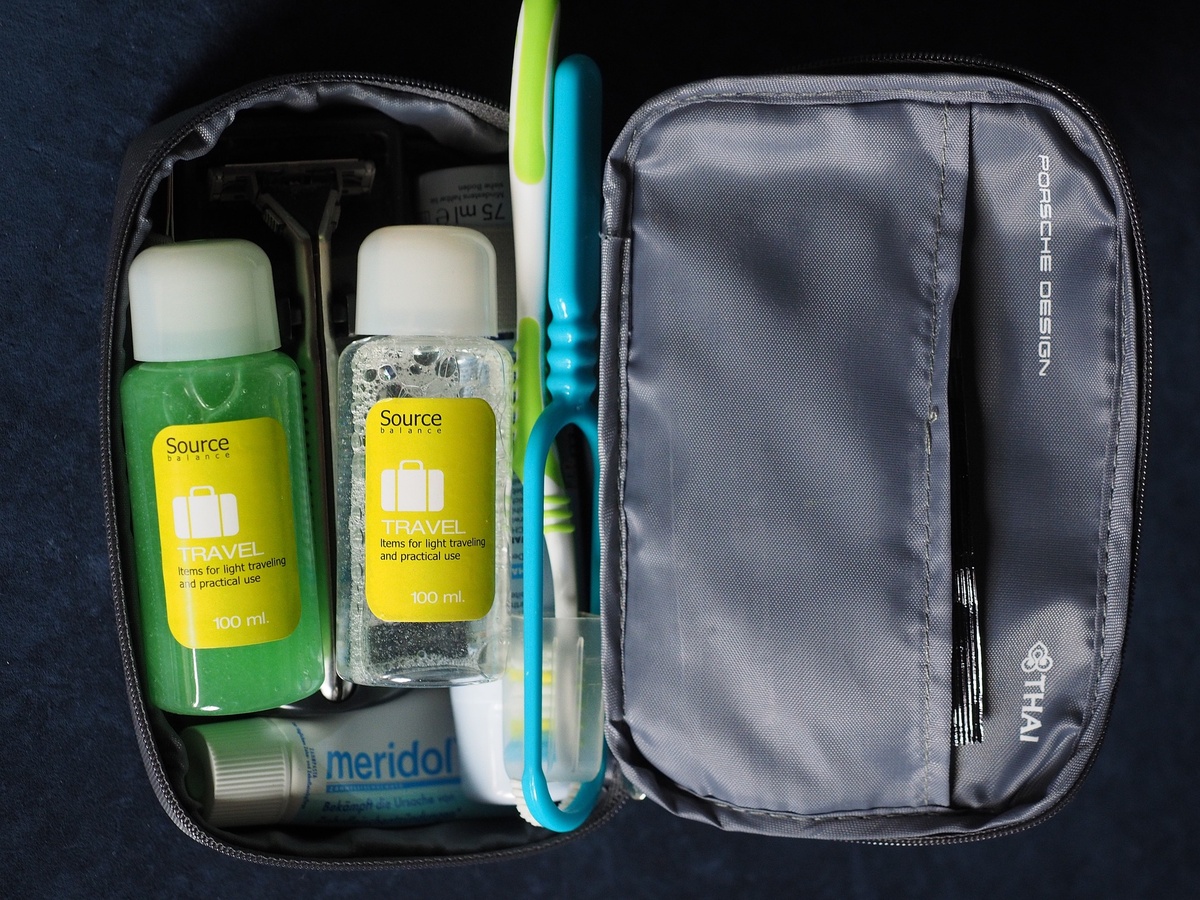
Image by Hans from Pixabay.
How much liquid can you carry on a plane in hand luggage?
If you’re asking how much liquid can you carry on a plane in the UK, the answer depends on your departure airport.
While several major airports have relaxed the rules, the traditional liquid limit on planes still applies at many locations. Understanding the current hand luggage liquid allowance before you travel can save you time — and prevent items from being confiscated at security.
The standard 100ml rule (Still applies at most UK airports)
At most UK airports, the rules for hand luggage liquids remain:
Maximum 100ml per container
All containers must fit inside one transparent, resealable 1-litre plastic bag
Only one bag per passenger
Even if a bottle is only half full, if the container size exceeds 100ml, it will not be allowed through security. You will usually need to:
Remove the liquids bag from your cabin luggage
Place it in a tray for separate screening
Ensure the bag closes fully
This remains the default hand luggage liquid allowance across much of the UK.
What are the permitted liquids in hand luggage?
Airport security defines liquids broadly. If it pours, spreads, smears or sprays, it counts. Common permitted liquids in hand luggage (within the size limits) include:
Drinks such as water, juice and alcohol
Toiletries like toothpaste, shampoo and perfume
Liquid cosmetics including foundation and lip gloss
Gels and sprays such as hair gel or deodorant
Semi-liquid foods like jam, honey, yoghurt, pâté and sauces
Contact lens solution
These are all considered allowable liquids in carry on luggage — but only within the size limits set by your airport.
How did the 100ml rule start?
The liquid limits were introduced globally in 2006 after a foiled plot involving liquid explosives disguised in drink bottles. The 100ml limit was chosen as a volume considered insufficient to assemble a viable explosive device onboard. It was originally introduced as a “temporary measure” — but remained in place for nearly 20 years until CT technology allowed relaxation.
Airports allowing up to 2 litres per container
Thanks to new CT security scanners, several major airports have replaced the 100ml rule with a much higher limit. We’ll explain everything in more detail below, including exceptions and helpful tips to make security easier, but here are the main points.
Airports currently allowing liquids up to 2 litres per container:
Heathrow (all terminals)
Gatwick
Edinburgh
Birmingham
At these airports:
Containers can hold up to 2 litres
Liquids can remain inside your cabin bag during screening
A plastic liquids bag is no longer required
There is no limit on the number of containers (as long as each is under 2 litres)
This significantly changes the traditional liquid limit on planes — but only at these specific airports. Metal water bottles must still be emptied before security, and staff may still conduct manual checks if necessary.
How much liquid can you carry in hold (checked) luggage?
If you’re struggling with the hand luggage liquid allowance, the simplest solution is often to pack liquids in your hold (checked) luggage instead.
Unlike cabin baggage, the liquid limit on planes mainly applies to hand luggage — not checked bags.
Are there liquid limits in checked luggage?
There is no fixed size restriction for liquids in hold luggage on UK flights. That means you can pack:
Full-size toiletries (shampoo, conditioner, body wash)
Large bottles of sunscreen or lotion
Perfume and cosmetics
Food products and sauces
Bottled drinks
Wine or spirits (subject to alcohol strength rules)
This makes checked baggage far more flexible than cabin luggage when it comes to liquids.
Alcohol in hold luggage
Alcohol is allowed in checked luggage, but there are important restrictions:
Alcohol under 24% ABV (most wine and beer) – no volume limit.
Alcohol between 24% and 70% ABV – limited to 5 litres per passenger.
Alcohol over 70% ABV – prohibited.
Always check your airline’s specific policies, especially if travelling internationally.
Packing liquids safely in checked bags
Although there’s no formal size limit, liquids in hold luggage can still cause problems if not packed properly. Suitcases are:
Lifted repeatedly
Stacked tightly
Subject to pressure changes
To avoid leaks:
Tighten all lids securely.
Tape caps closed if possible.
Place liquids inside sealed plastic bags.
Wrap glass bottles in clothing or bubble wrap.
Keep liquids away from electronics.
Spillage is one of the most common causes of damaged luggage contents — careful packing prevents costly mistakes.
International travel & customs considerations
While there may be no size limits for liquids in checked luggage, customs rules at your destination may restrict certain products, including:
Alcohol quantity limits
Food items
Dairy or meat products
Agricultural goods
Security rules and customs rules are different. Even if you’re allowed to pack a liquid in hold luggage, it may still be restricted on arrival in another country. Always check destination regulations before travelling.
When is it better to use hold luggage?
Packing liquids in checked baggage is often easier when:
You’re travelling from an airport still enforcing the 100ml rule.
You need full-size toiletries.
You’re carrying multiple liquid products.
You don’t want to worry about plastic liquids bags.
You’re bringing gifts such as alcohol or cosmetics.
If you’re unsure about permitted liquids in hand luggage, placing larger items in hold baggage removes the stress of cabin restrictions entirely.
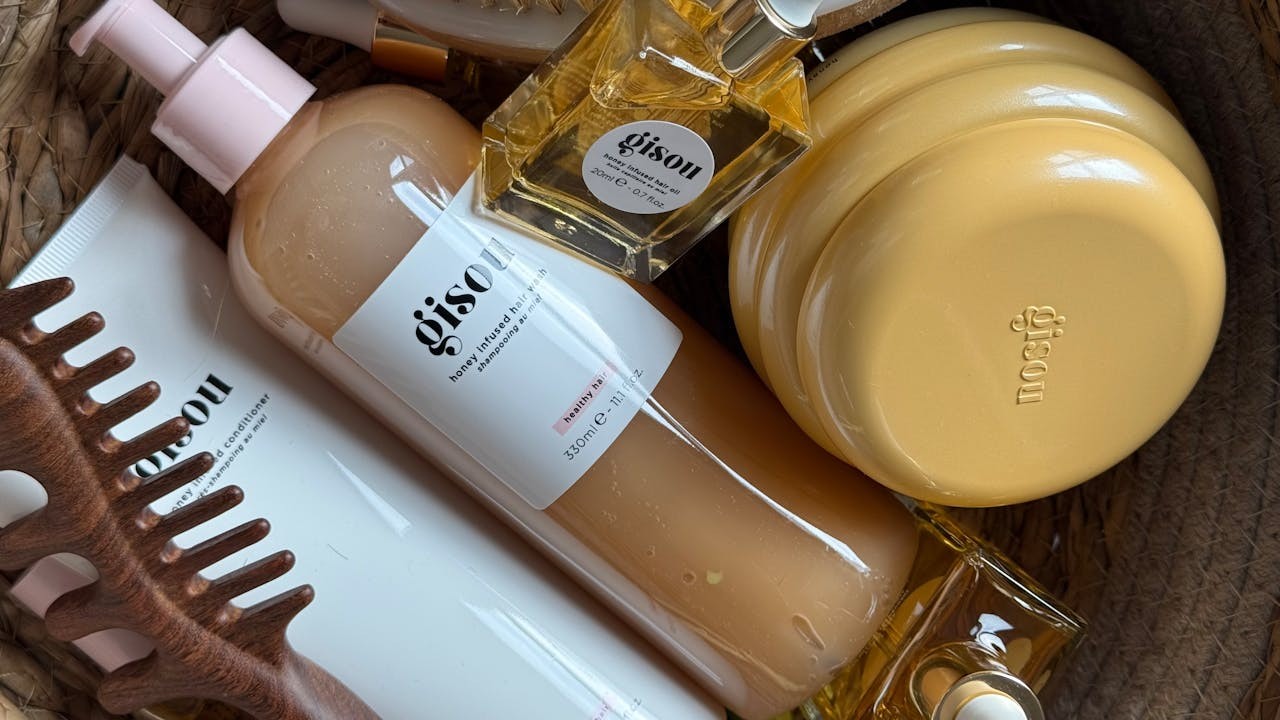
Image by Roselène de Koning from Pexels.
When can you carry more than 100ml through airport security?
Most travellers are familiar with the 100ml liquid limit on planes, but fewer realise there are important exemptions to standard hand luggage liquid restrictions.
While the general rule limits carry on luggage liquids to 100ml per container (unless your airport allows up to 2 litres), certain items are classified as permitted liquids in hand luggage and can exceed this limit.
Here’s when you can legally carry more than 100ml through UK airport security.
Duty-free liquids (Bought after security)
Liquids purchased after you pass through security — such as alcohol, perfume or cosmetics — are exempt from the standard hand luggage liquid allowance. You may carry them onboard even if they exceed 100ml, provided that:
They are sealed inside an official tamper-evident security bag.
The receipt remains visible inside the bag.
The bag is not opened before reaching your final destination.
If you are connecting through another airport, the items may be re-screened. Always check the rules at transfer airports, especially if travelling outside the UK.
Medical liquids over 100ml
Essential medical liquids are exempt from normal liquid limits for carry on luggage. This includes:
Prescribed liquid medicines
Prescription creams
Essential medical solutions
To carry medical liquids over 100ml:
Bring a prescription, GP letter or medical confirmation.
Declare the liquid at security.
Be prepared for additional screening.
Containers may be opened for testing.
Over-the-counter liquids are normally treated as standard hand luggage liquids unless medically justified. There is no fixed volume limit for medically necessary liquids — only what is reasonable for your journey.
Special dietary liquids
Passengers with specific dietary needs may carry liquid products exceeding 100ml when medically required. This may include:
Nutritional supplements
Liquid food replacements
Allergy-specific liquid food products
These qualify as allowable liquids in carry on luggage when supported by a genuine medical or dietary need. Security staff may request clarification.
Baby food, baby milk & breast milk
Parents travelling with an infant are exempt from standard cabin luggage liquids rules. You may carry:
Baby formula (cow’s, soya or specialist formula)
Sterilised water (in a baby bottle)
Baby food (including liquid or semi-liquid food)
Unfrozen breast milk (up to 2 litres per container)
Important conditions:
An infant must be travelling (except for expressed breast milk).
Items must be declared at security.
Containers may be screened separately.
Frozen breast milk is not allowed in hand luggage.
There is no strict total quantity limit — only what is reasonable for the journey. These exemptions override the normal hand luggage liquid limit at all UK airports.
Frozen items and ice packs
Frozen liquids are permitted in hand luggage only if they are completely solid at the time of screening. If partially thawed and containing liquid, they may be refused under normal carry on luggage liquids rules. Ice packs and cooling gel packs are allowed if:
They are required for medical use or baby food storage.
They are fully frozen during screening.
If unsure, consider packing them in hold luggage, where liquid limits do not apply.
Cigarette lighters
Lighters are regulated separately from other liquids. You may:
Carry one lighter only.
Keep it on your person during the flight.
Place it in a clear resealable bag at security if required.
Lighters cannot be packed in checked luggage.
The UK’s Airport Liquid Rules for 2026
How Much Liquid Can You Carry on a Plane in 2026?
If you’re wondering how much liquid can you carry on plane in 2026, the answer now depends on which UK airport you’re flying from.
The traditional 100ml liquid limit on planes has now been scrapped at many major UK airports — but not all of them.
Thanks to new CT (computed tomography) security scanners, passengers at several airports can now carry:
Containers holding up to 2 litres
Liquids left inside cabin luggage
No need for a 1-litre plastic bag
However, some airports still enforce the standard 100ml hand luggage liquid limit.
Because airport luggage liquid restrictions vary by location, always check your departure and return airport before travelling.
Which UK airports have scrapped the 100ml rule?
The following major airports now allow containers up to 2 litres per item in hand luggage:
Heathrow
Gatwick
Edinburgh
Birmingham
Bristol
At these airports:
You can leave liquids inside your cabin luggage.
A plastic liquids bag is no longer required.
Laptops and large electronics can remain inside your bag.
This significantly changes the usual hand luggage liquid allowance and makes security much faster — in theory.
Which airports still enforce the 100ml rule?
Some UK airports still apply the traditional liquid limits for carry on luggage, including:
Luton
Manchester
Stansted
Cardiff
Glasgow
Southampton
Newcastle
Liverpool
East Midlands
Aberdeen
Norwich
Southend
Teesside
Inverness
Bournemouth
At these airports:
Each container must be 100ml or less
All containers must fit inside a 1-litre transparent resealable bag
The bag must be presented at security
What do the new CT scanners change?
The new CT scanners produce detailed 3D images of your bag, meaning:
Liquids in cabin luggage no longer need to be removed
Laptops and electronics can stay inside your bag
Containers up to 2 litres are permitted
This upgrade significantly modernises UK airport security and relaxes the historic hand luggage liquids rules introduced in 2006.
However, the rollout has been uneven. Some airports installed the scanners but have not yet received approval to lift the 100ml limit.
Are there limits to the 2-litre rule?
Yes — a few practical ones.
There is no limit on the number of 2-litre containers you can carry.
Vacuum flasks must still be emptied.
Metal water bottles must be empty before security.
Security officers can still manually inspect your bag.
Although the liquid allowance carry on luggage has expanded, officers retain discretion if something appears suspicious.
Do you still need a plastic bag in 2026?
At most major airports with CT scanners — no. But at airports still enforcing the 100ml rule, you must:
Use one transparent resealable bag (approx. 20cm x 20cm)
Ensure it holds no more than 1 litre total
Present it separately at security
This means the hand luggage liquid limit process still varies widely across the UK.
Will security queues be faster?
Airports have promised shorter queues thanks to:
No unpacking liquids
No unpacking electronics
Faster 3D screening
Some airports report improved passenger flow. However, the sensitivity of new scanners has led to more manual bag searches in certain cases. Items that have triggered extra searches include:
Sunscreen
Certain food products
Books placed next to laptops
Bottles with thick walls
If your bag is regularly hand-searched, ask staff which item triggered it — packing differently next time may speed up your journey.
What happens on the return flight?
This is where many travellers get caught out. Even if your UK departure airport allows 2-litre liquids, your destination airport may still enforce strict 100ml carry on luggage liquids rules. Many European airports reverted to the 100ml rule in 2024 due to equipment approval issues.
Always check:
Departure airport rules
Transfer airport rules
Return airport rules
Assume the old 100ml rule applies unless you confirm otherwise.
Are there other luggage restrictions?
Yes. Beyond the liquid limits for carry on luggage, remember:
Weapons and weapon-like objects are banned.
Hazardous materials are prohibited.
Lithium batteries have strict watt-hour limits.
Some destinations restrict food and toiletries.
Powder-like substances may face additional screening on flights to the US.
Security rules vary globally — even between UK airports.
Travel prepared — From packing liquids to protecting your rights
Now that you understand what liquids you can take on a plane — from the 100ml rule to the newer 2-litre limits at selected UK airports — you’re already travelling smarter. Knowing the hand luggage liquid allowance and packing correctly means fewer delays at security and a smoother start to your trip.
But being a confident traveller isn’t just about getting your toiletries through the scanner. It’s also about knowing what happens if your journey doesn’t go to plan.
Even with modern security systems and strict aviation regulations, disruptions still happen. Flights are cancelled. Departures are delayed. Connections are missed. Luggage goes astray. And sometimes, passengers are denied boarding due to overbooking.
Understanding airport liquid rules helps you avoid small setbacks at the checkpoint. Understanding your air passenger rights helps you deal with the bigger disruptions.
If you’re flying from the UK or the EU — or travelling on a UK or EU airline — you’re protected under passenger rights legislation. In the UK, this falls under UK261, the post-Brexit version of EU Regulation 261. These rules are designed to ensure passengers are treated fairly when flights are disrupted.
Here’s what that protection can include:
Flight cancellations: If your flight is cancelled, you’re entitled to a choice between a refund or rerouting. In many cases, you may also claim compensation of up to £520, depending on the distance and circumstances.
Delays of 3 hours or more: If you arrive at your final destination more than three hours late and the delay was within the airline’s control, you could be eligible for compensation. Airlines must also provide meals and, if necessary, overnight accommodation.
Denied boarding (Overbooking): If you’re denied boarding against your will, you’re entitled to compensation and an alternative travel arrangement.
Baggage issues: Lost, delayed, or damaged luggage may be reimbursed under international agreements, often up to around £1,550.
Knowing what liquids you can carry in your hand luggage prepares you for security. Knowing your passenger rights prepares you for everything else.
Because smart travel isn’t just about packing correctly — it’s about understanding your rights if things go wrong along the way.


