- Blog
- Luggage & Security Rules
- Can You Take Medication on a Plane? UK Airport Rules Explained
Can You Take Medication on a Plane? UK Airport Rules Explained
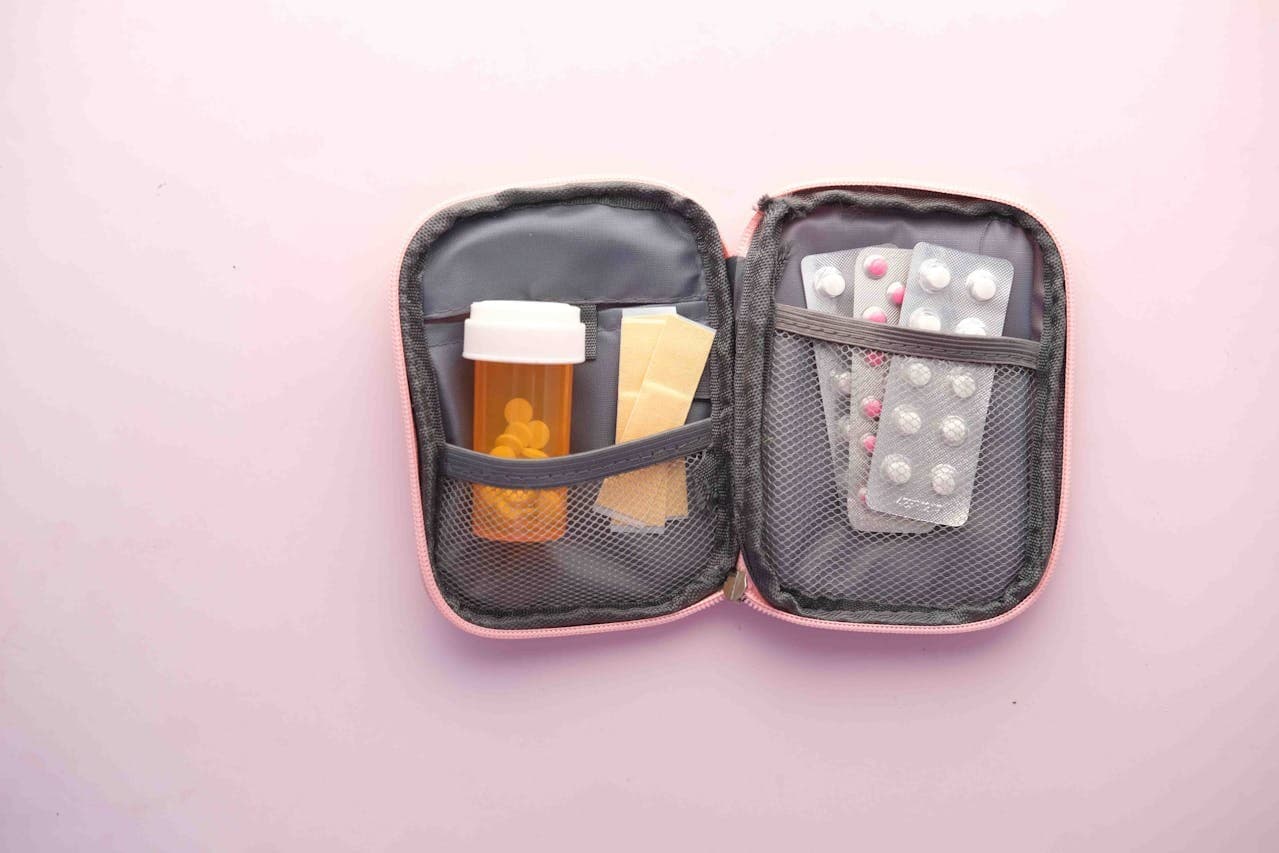
Whether you're taking a couple of paracetamol for a headache or managing a complex medical condition with multiple prescriptions, you've probably asked yourself: can I take medication through UK airport security?
You're not alone. Questions about travelling with medicine are among the most searched topics before a UK departure — and understandably so. The last thing anyone wants is to have essential medication flagged at the screening lane, or worse, confiscated before a long-haul flight.
The rules aren't always obvious. Liquid medications, controlled drugs, and large quantities can all trigger extra scrutiny at the checkpoint — and many travellers aren't sure what applies to their situation.
The good news: in most cases, you can take your medication through UK airport security without any issues. You just need to know the rules.

Image by yana from Pexels.
Can you take solid tablets and capsules through UK airport security?
The good news is that solid medication is usually the simplest type of medicine to travel with. Common tablets and capsules — such as paracetamol, ibuprofen, antihistamines, vitamins, or prescription medication — are generally allowed on UK flights without any special restrictions.
Travelling with tablets in hand luggage
You can carry tablets and capsules in your cabin bag without any problem. Airport security normally treats them like any other everyday item.
In most cases:
You do not need to remove them from your bag at security.
They can stay inside your hand luggage during screening.
No separate tray or liquids bag is required.
Keeping medicines in their original packaging is recommended, as it helps security staff quickly identify them if they need to check your bag.
Tablets in checked luggage
Solid medication is also permitted in checked baggage with no specific quantity restrictions for normal personal use.
This can be useful for:
Backup medication supplies.
Longer trips.
Large vitamin or supplement containers.
However, it’s still best to keep any medication you may need during the flight in your cabin bag.
Keep essential medication with you
Even though tablets are allowed in checked baggage, essential medication should always travel in your hand luggage.
Checked bags can occasionally be delayed, misplaced, or arrive late. If you rely on medication during your journey or shortly after landing, keep it with you in the cabin rather than packing it in the hold.
A good rule is:
Cabin bag = essential medication.
Checked bag = extra or backup supplies.
Do you need proof for tablets?
For most standard medication, no documentation is required. However, if you’re carrying:
Large quantities,
Controlled medication,
Strong prescription drugs, or
Medication in unlabelled containers,
it’s a good idea to bring a copy of your prescription or a doctor’s letter, especially when travelling internationally.
Helpful travel tip
Using a clearly labelled pill organiser can make travelling easier, but if possible, keep at least some medication in the original packaging to avoid confusion during airport security checks.

Image by cottonbro studio from Pexels.
Can you take liquid medication on a plane in the UK?
This is where airport security rules can seem a little confusing, but the good news is that travelling with liquid medication is usually straightforward once you understand the basics. The key factors are the amount you’re carrying and whether you need the medicine during your journey.
Liquid medicines under 100 ml
If your liquid medication is in a container of 100 ml or less, you can carry it in your hand luggage just like any other liquid. Simply place it inside your transparent 1-litre resealable liquids bag alongside your toiletries.
No additional documentation is normally required.
Liquid medicines over 100 ml in hand luggage
You can also take liquid medicine larger than 100 ml in your cabin bag if it is considered essential for your trip.
Airport security staff may ask you to confirm that the medication is genuine and necessary, so it’s a good idea to travel with supporting documentation such as:
A prescription label with your name.
A copy of your prescription.
A letter from your GP or specialist.
In most cases, security officers may carry out a quick inspection or screening of the medicine before allowing it through.
Liquid medicines in checked luggage
The 100 ml liquid restriction does not apply to checked baggage. If you’re carrying larger bottles of medication that you won’t need during the flight, the easiest option is usually to pack them in your hold luggage.
In general:
No 100 ml limit applies in checked baggage.
Documentation is not usually required.
Larger quantities can normally be transported without issue.
Tell security before screening
If you’re travelling with liquid medication over 100 ml in your cabin bag, inform airport security before your belongings go through the scanner.
Security staff may inspect the medication separately or carry out a quick swab test. This is completely routine and usually only takes a few moments.
Other medical liquids and sprays
Items such as:
Nasal sprays
Eye drops
Inhalers
Creams
Medical gels
are generally permitted in hand luggage. However, creams and gels are still treated as liquids and may need to follow standard cabin baggage liquid rules unless they are medically necessary.
Helpful tip for over-the-counter medicine
If you’re carrying large bottles of non-essential over-the-counter medicine, such as cough syrup, it’s usually easier to place the full-size bottle in your checked baggage and carry only a travel-size amount (under 100 ml) in your cabin bag if needed during the journey.
Can you fly with medicines containing controlled drugs from the UK?
Some medicines that are commonly available in the UK contain ingredients classified as controlled drugs. One of the most common examples is codeine, which is found in certain stronger painkillers such as co-codamol.
Because these medicines are more strictly regulated, travelling with them can involve additional rules and documentation — especially on international trips.
Check your medication before you travel
If you’re unsure whether your medicine contains a controlled substance, speak to your pharmacist before flying. They can confirm whether your medication is classified as a controlled drug and advise you on any paperwork you may need.
Travelling within the UK
For domestic UK flights or departures from UK airports, you’ll usually be allowed to carry controlled medication for personal use. However, it’s strongly recommended that you travel with:
The medicine in its original packaging.
A prescription label showing your name.
A copy of your prescription or a doctor’s letter.
This can help avoid delays or questions during airport security checks.
International travel rules can be very different
This is where it becomes especially important to check ahead. Some countries have much stricter rules on controlled medication than the UK — and certain medicines that are legal in Britain may be restricted or even banned elsewhere.
Before travelling internationally, always check:
The official travel advice for your destination.
Embassy or consulate guidance.
Local customs and health regulations.
In some cases, you may need:
A doctor’s letter.
A copy of your prescription.
Prior approval from local authorities.
Limits on the quantity you can bring.
Keep controlled medication in your hand luggage
If you need the medicine during your journey, it’s best to carry it in your cabin bag rather than checked luggage. This helps avoid problems if your checked baggage is delayed or lost.
Helpful travel tip
Try to carry only the amount of controlled medication you reasonably need for your trip. Bringing unusually large quantities without documentation may lead to additional questions from airport security or customs officials.
Can you bring medical devices and equipment through UK airport security?
Travelling with medical equipment — whether it’s an inhaler, insulin pen, CPAP machine, nebuliser, or another essential device — is usually straightforward once you know what to expect at the airport.
Most airlines and airport security teams are used to assisting passengers travelling with medical devices, but a little preparation can make your journey much smoother.
Insulin, injections, and diabetes equipment
Insulin, insulin pens, glucose monitors, and related diabetes supplies are generally allowed in your hand luggage without needing a medical certificate.
However, it’s a good idea to:
Keep insulin in your cabin bag, as temperatures in the hold can damage it.
Inform security staff if you’re carrying needles or injection devices.
Bring prescription labels or a doctor’s letter where possible.
If you use sharps, carrying a small travel sharps container can also be helpful.
Pacemakers and implanted medical devices
If you have a pacemaker or another implanted medical device, let airport security know before passing through body scanners or metal detectors.
Security staff can provide an alternative screening method if needed to avoid interfering with the device.
CPAP machines, nebulisers, and external medical equipment
Larger medical devices such as:
CPAP machines
Portable oxygen concentrators
Nebulisers
Infusion pumps
are generally permitted onboard, but airlines may ask for additional information before travel.
You may need to provide details such as:
Device name and model
Dimensions and weight
Battery type and capacity
Whether the device will be used during the flight
If you plan to use a medical device onboard, it’s best to contact the airline in advance.
Bring supporting documentation
Travelling with a signed letter from your doctor or healthcare provider is highly recommended, especially for larger medical equipment or controlled medication.
Your documentation should ideally explain:
Your medical condition
The equipment or medication required
Any batteries, needles, or liquids you need to carry
Having paperwork ready can help speed up security checks and avoid issues at the boarding gate.
Security screening and X-ray machines
Most medical devices can safely pass through airport scanners, but if your equipment should not go through an X-ray machine, tell a security officer before screening begins.
In these situations, airport staff can usually carry out:
A manual inspection
A hand search
Alternative screening procedures
Keep essential medical equipment in your cabin bag
Important medication and medical devices should always travel in your hand luggage whenever possible.
Checked baggage can occasionally be delayed or lost, so anything you may need during the flight or immediately after landing should stay with you in the cabin.
Important: airlines do not provide medication refrigeration
Most airlines do not offer onboard refrigeration for passenger medication.
If your medication needs to stay cool — such as insulin or certain biologic medicines — you should travel with an insulated medical travel case or cooling pouch designed for air travel.
Travel prepared — From carrying medication to knowing your passenger rights
Now that you know how to travel safely with medication, medical equipment, and essential health supplies, you’re already far better prepared for your journey. Understanding airport security rules — from liquid medicine limits to travelling with prescriptions — can help you avoid unnecessary stress at the airport.
But travelling confidently isn’t only about getting through security smoothly.
It’s also about knowing what to do if your trip doesn’t go according to plan.
Even with strict aviation safety standards and highly regulated airlines, disruption still happens. Flights can be delayed or cancelled, bags can go missing, and passengers are sometimes denied boarding due to overbooking.
Knowing the rules for travelling with medication helps you prepare for your flight. Knowing your air passenger rights helps you protect yourself when problems occur.
If you’re flying from the UK or the EU — or travelling with a UK or EU airline — you may be protected under air passenger rights laws such as UK261 and EU Regulation 261/2004. These regulations are designed to ensure passengers are treated fairly during major travel disruption.
Here’s what that can mean for you:
Flight cancellations: If your flight is cancelled, you may be entitled to a replacement flight or a refund. In many cases, you could also claim compensation depending on the distance of your journey and the reason for the disruption.
Delays over 3 Hours: If you arrive at your destination more than three hours late and the airline was responsible for the delay, you may qualify for compensation. Airlines may also have to provide meals, refreshments, and hotel accommodation when necessary.
Denied boarding (overbooking): If you’re refused boarding against your will because the flight was overbooked, you could be entitled to compensation and alternative transport.
Baggage problems: Lost, delayed, or damaged luggage may also be covered under international passenger rights rules, allowing travellers to claim reimbursement for essential expenses or damaged belongings.
This can be especially important when travelling with medication or medical equipment. Delayed baggage containing medicine, missed connections affecting treatment schedules, or overnight disruptions requiring access to medical supplies can quickly become stressful situations.
Understanding both airport security rules and your passenger rights helps you travel with more confidence — not just when everything goes smoothly, but also when unexpected problems arise along the way.
.jpg)

