- Blog
- Flight Terminology & Logistics
- How Do Planes Fly? A Simple Guide to the Science of Flight
How Do Planes Fly? A Simple Guide to the Science of Flight
Last updated on 20 January 2026
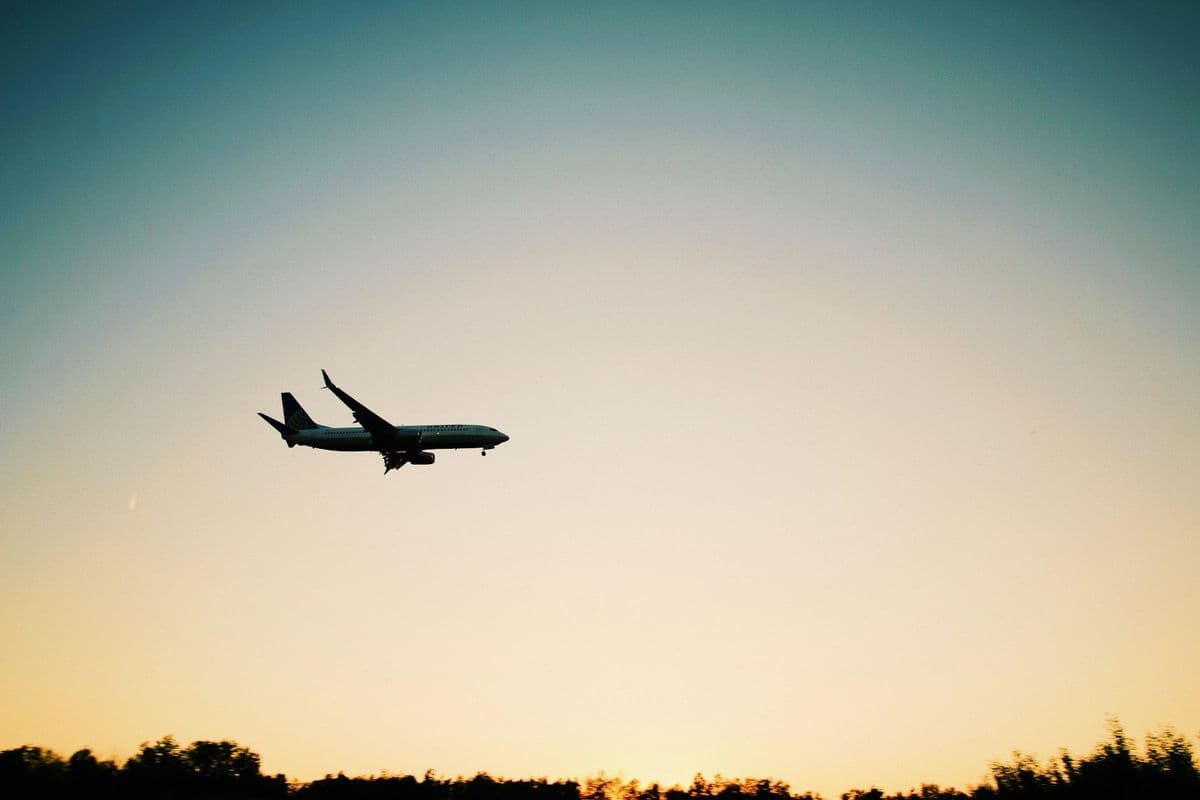
Planning a trip is exciting, but if you’ve ever gazed out the window during takeoff and wondered How does this giant machine even get off the ground?—you’re not alone. Air travel feels almost magical, yet it’s powered by physics, engineering, and some incredibly clever design.
To help you fly with confidence (and satisfy that curiosity we all have at 30,000 feet), we’ve put together a clear, friendly guide that explains how airplanes actually stay in the air. From the wings that generate lift to the engines that push the aircraft forward, you’ll learn the basics behind what makes flight possible—without needing a physics degree.
Let’s break it down and explore the fascinating science that keeps every flight smooth, stable, and sky-high.
Why do airplanes fly? Understanding the physics of flight
To understand how an airplane stays in the air, it helps to look at the physics behind flight—specifically, the forces acting on the wings and the airframe. Four basic forces work together to let an aircraft move forward and “float” in the sky: lift, weight, thrust, and drag.
The Four Forces of Flight
Drag
Drag is the force that opposes an aircraft’s motion through the air. It acts backward, as though trying to hold the airplane in place. Drag can be influenced by the aircraft’s shape, surface smoothness, and even by the lift produced by the wings. Its effect is to slow the airplane down.
Thrust
Thrust is the forward force generated by an airplane’s engines—either through a propeller or a jet engine. Engines accelerate air backward, creating a reaction force that pushes the aircraft forward. Thrust counters drag and allows the plane to gain speed.
Weight
Weight results from the aircraft’s mass and Earth’s gravitational pull. This downward force must be overcome by lift. Stabilizers on the tail help keep the aircraft level and restore balance after disturbances.
Lift
Lift acts perpendicular to the airflow and is created as air moves over and under the wings. It depends on the plane’s speed and the wing’s angle of attack—the angle between the incoming airflow and the wing. An airplane’s wings, or airfoils, are shaped specifically to maximize lift while minimizing drag.
In level flight, these forces balance: lift equals weight, and thrust equals drag.
Force in physics
According to Newton’s Second Law, a force equals mass times acceleration (F = ma). Everyday weight is actually the force of gravity acting on your mass—what a scale measures.
For an airplane, weight pulls it downward while the engines produce thrust to move it forward. Newton’s Third Law also comes into play: expelling air backward creates an equal and opposite reaction that pushes the airplane ahead.
As the plane moves, air pushes back on it, producing drag—much like the resistance you feel when you stop paddling in a swimming pool.
Understanding lift
Lift is more complex than thrust, drag, or weight. It is created by the wing’s shape—the airfoil—which features curved surfaces that cause air to move faster over the top than the bottom. Faster airflow above lowers the pressure, creating an upward force.
Engineers use mathematical models, especially those involving circulation, to accurately predict and optimize lift. These models allow the design of airplanes that are safe, efficient, and increasingly fuel-friendly.
Bernoulli’s principle and lift
Bernoulli’s principle explains part of the lift story: as airspeed increases, pressure decreases. Because the air over the wing’s curved top travels farther and faster than air below, pressure above the wing becomes lower, creating lift.
The faster an aircraft moves, the more lift it can generate.
Thrust and drag in action
Lift alone cannot fly an airplane; thrust and drag are equally important. Engines provide thrust to push the aircraft forward, while drag resists this motion.
Engineers minimize drag through streamlined design, smooth surfaces, and features like retractable landing gear. Efficiently balancing thrust and drag is key to performance and fuel economy.
During takeoff, thrust must exceed drag, and lift must exceed weight. This is why flaps extend from the wings—to increase lift. However, flaps also increase drag, so strong engines are needed. Once cruising, the pilot retracts the flaps and reduces engine power, allowing lift and weight—and thrust and drag—to settle into balance.
Airplanes fly because engineers skillfully manage lift, weight, thrust, and drag—and design wings and engines that take full advantage of the physics behind them. Even as research continues into the fine details of airflow and lift, modern aircraft are the result of decades of science, mathematics, and engineering working together to keep people safely airborne.
How do planes fly?
When you watch a jet take off, the loud roar you hear is from its engines—big metal tubes that constantly burn fuel and air. They’re incredibly powerful, but here’s the fun part: engines don’t make a plane fly. They just help it move fast enough so the wings can do their job.
Even birds, gliders, and paper airplanes can fly without engines!
What engines actually do
Engines have one main job: push the airplane forward. This forward motion creates fast airflow over the wings.
According to Newton’s laws of motion:
Pushing air backward creates an equal push forward (thrust).
Air pushing back on the plane causes drag (resistance), like water slowing you down in a pool.
Gravity pulls the plane downward (weight).
The wings push upward (lift).
An airplane can fly only when lift is strong enough to overcome weight, and thrust is strong enough to overcome drag.
How wings make lift
As we previously mentioned, wings are shaped like airfoils: curved on top and flatter underneath. As the airplane moves forward:
Air speeds up over the curved top surface.
Faster air means lower pressure above the wing.
Higher pressure under the wing pushes upward.
The wing also pushes air downward behind it (downwash).
According to Newton’s Third Law, pushing air down creates an upward reaction—lift.
Both pressure differences and downwash work together to lift the airplane.
You can experience this yourself: Stick your hand out of a moving car window. Tilt it up a little—it rises. Tilt it down—it drops. This tilt is called the angle of attack, and it’s key to producing lift.
Angle of attack: Lift’s secret ingredient
The angle of attack is the angle between the wing and the oncoming air.
Increase it slightly → more lift
Increase it too much → the airflow breaks away from the wing → stall (the wing stops lifting)
A stall doesn’t mean the engines fail, it means the wing isn’t producing enough lift.
Wing parts that help: Flaps and slats
During takeoff and landing, planes need extra lift at slower speeds. That’s why you may notice the wings “opening up”:
Flaps extend from the back of the wing
Slats extend from the front of the wing
They change the wing’s shape, increasing lift (and drag), allowing safe takeoffs and landings on runways that aren’t miles long.
Wingtip vortices: The spirals you don’t see
As wings push air downward, some of that air curls around the wingtips, forming spirals called wingtip vortices. They:
Reduce lift slightly
Create turbulence
Require planes to keep spacing when landing or taking off
They’re a natural side effect of lift.
Why engines matter so much
Even though wings create lift, the wings need airflow to work, so engines are essential. Most modern airliners use turbofan engines, which work in four main steps:
Intake & Compression: Air is pulled in and squeezed by spinning compressor blades.
Combustion: Fuel is added and ignited, creating hot, high-pressure gases.
Turbine Expansion: These gases spin turbines that power the front compressors.
Exhaust & Thrust: Hot air shoots out the back, pushing the airplane forward.
Why turbofans are efficient
Most of the air actually bypasses the hot engine core. A giant front fan pushes this extra air backward, creating thrust with less fuel. This design:
Saves fuel
Reduces noise
Improves performance
That’s why turbofans are used on almost all commercial jets.
So… how do planes fly?
Planes fly because their wings skillfully control air, creating lift that overcomes gravity, while engines push them forward, giving the wings the airflow they need. Behind the scenes, physics—Newton’s laws, pressure differences, and clever wing shapes—work together to keep airplanes safely in the sky.
Modern aircraft are the result of decades of science, engineering, and design coming together to make flight efficient, smooth, and incredibly safe.

Image by Renan from Unsplash.
How do planes steer?
What is steering?
Steering—whether it's a skateboard, a bike, a car, or a large aircraft—means changing the direction of travel. In physics, changing direction means changing velocity, even if the speed stays the same. And any change in velocity is an acceleration.
According to Newton’s laws, acceleration requires a force—a push or a pull. So to steer any moving object, a force must be applied to change its path.
Another way to think about steering is as a transition from moving in a straight line to moving along a curve or circle. Doing this requires a centripetal force, a force directed toward the center of the turn.
In a car, centripetal force comes from friction between the tires and the road.
On a bicycle or skateboard, riders lean into the turn so part of their weight provides the needed centripetal force.
In every case, something must pull you away from straight-line motion to move you into a curved path.
Steering in theory: How a plane turns
Aircraft don’t touch the ground in flight, so they use a different method to generate centripetal force. Instead of relying on friction, a plane banks—it tilts to one side, lowering one wing.
When a plane banks:
The total lift produced by the wings tilts with the aircraft.
Most of the lift still acts upward, but a portion of it is redirected sideways.
This sideways component of lift becomes the centripetal force that turns the aircraft.
Because part of the lift is now horizontal rather than vertical, there is less upward lift to counteract the aircraft’s weight. Unless the pilot compensates—typically by increasing the angle of attack with the elevators—the aircraft will lose altitude during a turn.
The steeper the bank, the greater the sideways lift, and the more the aircraft must compensate to avoid descending.
Steering in practice: How pilots control direction
Although aircraft have steering controls in the cockpit, the mechanics are completely different from steering a car. Planes turn by changing how air flows around their wings and tail through movable surfaces known as control surfaces. These include:
Ailerons – Located on the trailing edges of the wings, they control roll, tilting the plane left or right.
Elevators – On the tail’s horizontal stabilizer; they control pitch, moving the nose up or down.
Rudder – On the tail’s vertical stabilizer; it controls yaw, the left-right movement of the nose.
Flaps and slats – Modify wing shape to increase lift during takeoff and landing.
Spoilers and air brakes – Reduce lift, increase drag, and help manage descent or assist with turning by disrupting airflow.
For example, spoilers often work asymmetrically—one rises while the other lowers—to help roll the aircraft and begin a turn.
Although planes have many moving parts, their fuselage contributes little to flight dynamics; it is designed mainly for passenger capacity, cargo, and aerodynamic smoothness. Strictly speaking, the wings are the components that truly “fly.”

Image from Daniel Eledut from Unsplash.
How do airplanes take off?
Takeoff is one of the most critical and technically demanding phases of flight. During this stage, engines operate at maximum power, and every system must perform flawlessly to ensure a safe departure.
A typical takeoff sequence involves the following steps:
1. Preparation
Before takeoff, pilots taxi the aircraft to the assigned runway. During this time, they conduct briefings and complete a series of checklists to confirm that all systems are functioning properly and the aircraft is ready for departure.
2. Entering the runway
Once cleared for takeoff, the aircraft lines up on the runway—a long, paved surface specifically designed for aircraft to accelerate, take off, and land.
3. Setting engine thrust
Pilots advance the throttles, delivering the thrust needed to accelerate down the runway. As the engines expel air rearward, the aircraft begins moving forward.
4. Acceleration to rotation speed
As the airplane speeds up, it approaches its rotation speed (Vr). This speed varies depending on aircraft type, weight, and environmental factors such as temperature and wind. Commercial jets typically reach around 250–300 km/h before liftoff.
If you're interested in the speed of planes, here's a complete article about the different speeds that airplanes fly.
5. Rotation
At Vr, the pilot gently pulls back on the controls, raising the aircraft’s nose. This adjustment is made using the elevators on the tail and supported by the ailerons on the wings.
6. Lift generation
By increasing the aircraft’s pitch, the angle of attack changes, altering the airflow over the wings. This creates enough lift to overcome gravity and gradually raise the aircraft off the ground.
7. Liftoff
With the right combination of speed and angle of attack, the airplane fully leaves the runway and begins its initial climb.
8. Landing gear retraction
Shortly after liftoff, once it is safe, the pilots retract the landing gear. Pulling the wheels into the aircraft’s body reduces drag and significantly improves aerodynamic efficiency.
9. Climb-out
The aircraft continues to gain altitude and speed as the pilots adjust its heading toward the planned route. Throughout the climb, they monitor engine performance, flight controls, and navigation systems to ensure a smooth and safe transition to cruise flight.
During takeoff, flaps and slats on the wings are extended. These devices increase the wing’s surface area and lift, allowing the aircraft to become airborne at lower speeds and reducing the runway length needed for departure. This design helps airports operate efficiently without requiring extremely long runways.

Image by Avel Chuklanov from Unsplash.
How do airplanes land?
Landing, much like takeoff, is one of the most precise and skill-intensive phases of a flight. During this stage, pilots must carefully manage airspeed and descent rate to ensure the aircraft touches down smoothly and safely.
Below are the main steps a flight crew follows when landing an airplane:
1. Descent
Before beginning the approach, the aircraft leaves its cruising altitude and starts descending toward the airport. Pilots adjust engine thrust and pitch to initiate and control this descent.
2. Speed and path control
Throughout the descent, pilots use the aircraft’s control surfaces—ailerons, elevators, and rudder—along with engine power to maintain a safe speed and the correct flight path toward the airport.
3. Runway alignment
As the aircraft nears the airport, Air Traffic Control provides instructions to guide the airplane’s altitude, direction, and speed. This ensures the aircraft is properly lined up with the runway.
4. Landing configuration
Before landing, the aircraft must be set up for a safe approach. Pilots extend the landing gear and deploy the flaps, which increase lift at lower speeds and help stabilize the aircraft during the final approach.
5. Touchdown
On final approach, the pilot flying maintains the correct speed and attitude to guide the aircraft smoothly onto the runway. Meanwhile, the pilot monitoring keeps a close eye on all systems and parameters to ensure maximum safety.
6. Reverse thrust and braking
After touchdown, pilots use a combination of spoilers, brakes, and often reverse thrust—redirecting engine airflow forward—to slow the aircraft quickly and safely.
7. Rollout and taxi
Once the aircraft has slowed sufficiently, it exits the runway via a taxiway. Guided by ATC, the pilots taxi the airplane to the gate or parking area.
8. Engine shutdown and deboarding
At the gate, the engines are shut down, and stairs or an airbridge are connected to the aircraft. Passengers can then safely disembark.
Flaps play an important role during landing because they allow the aircraft to maintain lift even at reduced speeds. At the tail, the elevator and rudder also contribute significantly: the elevators control the aircraft’s pitch, enabling it to climb or descend, while the rudder adjusts yaw, helping pilots steer the nose left or right.
Travel prepared — From understanding flight to knowing your rights
Learning how airplanes fly—how wings create lift, how engines provide thrust, and how pilots keep the aircraft stable—can make flying feel less mysterious and more reassuring. But being a confident traveler isn’t just about understanding what happens in the sky. It’s also about knowing what to expect on the ground, especially when your journey doesn’t go exactly as planned.
Even with all the engineering that keeps airplanes safe and reliable, travel can still come with surprises: sudden weather changes, missed connections, delays, or baggage hiccups. Understanding why these things happen helps, but understanding your rights helps even more.
Whether you're taking a short-hop with a low-cost carrier or a long-haul flight on a major international airline, European air passenger protections cover most flights that depart from or arrive in the EU, UK, Iceland, Norway, and Switzerland. These rules exist to ensure that no matter where you fly or how much you paid for your ticket, you’re treated fairly when things go wrong.
Here’s what those rights include:
Flight Cancellations: You may be entitled to a full refund, rebooking, and in many cases up to £520 in compensation.
Delays Over 3 Hours: Airlines must offer meals, accommodation if necessary, and potential compensation.
Denied Boarding (Overbooking): If you're bumped from your flight, you’re owed immediate compensation and a new travel arrangement.
Baggage Problems: Lost, delayed, or damaged luggage can be reimbursed—often up to around £1,550 under international rules.
Knowing these protections means you don’t just understand how a plane stays in the air—you also know how to stay in control of your journey. With the right knowledge, you can respond calmly, make informed choices, and travel with confidence, no matter what comes your way.


